
Why location sells your event before the agenda does
Nobody writes “I fancy a few days in Barcelona” on a budget request. But it’s often why they asked.
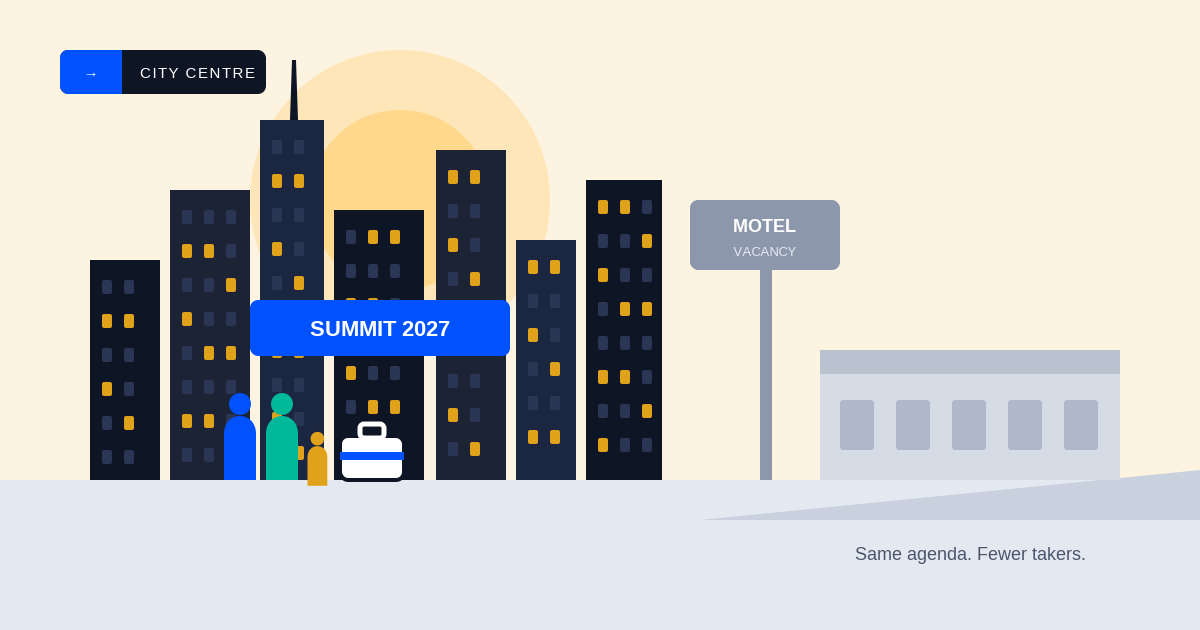
We spend a lot of time on agendas, speakers and floor plans. Fair enough. But we think one of the biggest reasons people choose an event is one they'd rarely admit to: they want to go there. The decision is almost subconscious. A conference in New York feels like an opportunity; the same conference in a motel off a Long Island highway feels like a chore. Same speakers, same sponsors, very different sign-up rates.
The pull of a place
This isn't just a hunch. The largest study we found on why people attend, the Decision to Attend study, surveyed more than 7,000 current and potential attendees and found that 82% said the destination definitely factors into their decision. A follow-up with 8,992 respondents put destination in the top three reasons people attend, alongside education and networking, and for 20% to 30% of them, location was the deciding factor.
The trip behind the trip
A great destination turns a work trip into something more. In that first study, more than half of attendees said they were likely to extend their stay or turn the trip into a holiday, and nearly half said they would bring someone with them. More recent data, including UK travellers, tells the same story.
Source: Perk / OnePoll: 600 C-suite and 4,000 business travellers, March 2025
Note who leads that chart: the most senior people, exactly the ones sponsors most want to meet. A city break with the family attached is a powerful reason to say yes to a conference.
The budget request writes itself
Here's the part no survey measures, but anyone who has worked in events will recognise. When an attendee asks their company to pay for a trip, the destination shapes the ask. An event in a city people want to visit gets a keener request, more colleagues wanting to go, and a manager who is more likely to sign it off. A hard-to-reach venue in the middle of nowhere starts every conversation on the back foot. We've found no research on this; it's our view from years on both sides of the stand.
The flip side: a place can push people away too
Location cuts both ways. When the Center for Exhibition Industry Research asked attendees why they had dropped a show, the top answer by a distance was that it was too far away.
Source: CEIR, How to Stop Attendee Loss: 421 US trade show attendees, reported June 2014
So the question isn't just “is it cheap?” or even “is it big enough?” It's “would our audience want to go there, and can they get there easily?”
What this means for organisers
- Sell the destination, not just the agenda. Coverage of the Decision to Attend study suggests promoting new and interesting things to do in the city to tip a “maybe” into a “yes”.
- Make it easy to stay on. Run the event into a Friday, negotiate hotel rates for extra nights, and say so in your marketing.
- Welcome the plus-ones. A simple partner programme or family-friendly guide costs little and makes the trip easier to say yes to.
- Don't confuse a big city with a good location. A characterful, easy-to-reach second city can beat a capital where the venue is an hour from anywhere.
Sources
- Associations Now: Decision to Attend study, phase one (Feb 2015)
- Associations Now: Decision to Attend 2 findings (Dec 2017)
- Perk / OnePoll: business travellers bringing family on work trips (Aug 2025)
- Trade Show Executive: CEIR, How to Stop Attendee Loss (2014)
Every figure in this post was checked against the source linked above. Where trusted data doesn't exist, we say so.